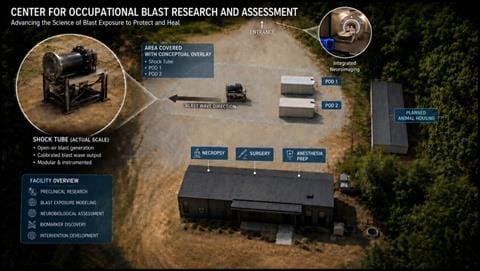
About COBRA.
The Center for Occupational Blast Research and Assessment (COBRA) is the Emory Human Performance Institute’s translational tactical brain health platform, focused on preventing and mitigating the effects of repetitive occupational blast-overpressure exposure on Service Members and tactical operators.
COBRA brings together expertise in neuroscience, neuroimaging, cognitive and sensorimotor assessment, psychological health, and human performance to investigate how repeated blast exposure may affect brain structure and function, behavior, physical performance, and long-term brain health. By integrating exposure characterization with multimodal brain-health and functional assessments, COBRA aims to improve understanding of individual responses to blast exposure and identify opportunities for earlier detection, risk reduction, and targeted intervention.
The Center connects research with real-world operational needs. Its translational approach is designed to support the evaluation of assessment methods, exposure-monitoring strategies, and potential protective interventions, while examining their scientific validity, feasibility, and potential for implementation at scale. Longitudinal research can help characterize relationships between exposure history, changes in brain health, and cognitive, psychological, and sensorimotor outcomes over time.
COBRA matters because the effects of repetitive occupational blast exposure may not be fully captured by traditional injury assessments alone. Better approaches to characterizing exposure and evaluating brain health could help inform decisions about monitoring, prevention, intervention, and readiness while advancing the evidence needed to protect the long-term health of those working in high-risk operational environments.
Through Emory’s interdisciplinary research and clinical network, COBRA aims to bridge scientific discovery and practical application, generating evidence to inform brain-health strategies for Service Members and tactical operators. Its longer-term vision is to help advance scalable, evidence-based approaches that preserve brain health, support operational performance, and reduce the potential consequences of repetitive occupational blast exposure.
What happens here.
Key facts.
Since 2023, the COBRA porcine blast program has enrolled 24 swine. Eighteen were exposed to blast, two served as sham controls, and four supported MRI protocol development. Each blast-exposed animal received five repeated exposures, for a total of 90 animal blast exposures
Including device characterization and instrumented headform calibration, the team has completed and characterized 156 blasts. Sixteen of these animals completed pre- and post-blast diffusion MRI
Milestones.
COBRA has progressed to active research operations, following its grand opening in 2023. Multiple large animal blast-exposure studies have been conducted at the facility. Current development includes characterization of the open-field blast device and continued development of the infrastructure supporting future blast studies.
Current & past projects.
Open-Field Blast Device Characterization
Experimental characterization of COBRA’s open-field shock tube to document the blast environment and support reproducible exposure conditions.
Hyperacute Biomarkers and Imaging Following Repetitive Blast Exposure
Pilot study using a swine model to investigate early responses to repetitive occupational-level blast exposure. Animals received five blasts and were assessed within two to three hours using MRI, blood and cerebrospinal fluid biomarkers, and brain-tissue analysis.
Large-Animal Repetitive Blast-Exposure Research
Ongoing research investigating biological and neurological responses to repetitive blast exposure, integrating controlled open-air blast exposures with MRI, blood sampling, and downstream tissue analysis.
Protective Collar Evaluation for Blast-Induced Brain Injury
Research evaluating a collar-based approach intended to mitigate blast-induced brain injury through mild internal jugular vein compression.
Impact.
The COBRA platform delivers controlled, repeatable, and scalable open-air blasts that mirror the low-level, repeated exposures service members experience during training. Within two to three hours of repetitive blast, exposed swine showed elevated neurofilament light chain in cerebrospinal fluid and elevated glial fibrillary acidic protein in plasma compared with controls, with upward trends in tau and UCH-L1.
Diffusion MRI revealed early microstructural changes in the brain about two hours after exposure, and histology showed signs of early microglial activation in white matter. Together, these findings suggest that measurable brain changes occur within hours of occupational-level blast, even in the absence of outward symptoms.
Tools developed through this work include the field-deployable open-air porcine blast platform, an instrumented 3D-printed pig headform for pre-test calibration, and a standardized hyperacute assessment pipeline that integrates imaging, fluid biomarkers, and histology. As one of the few large-animal models of repetitive occupational-level open-air blast, this work provides an evidence base to inform exposure guidelines that protect the brain health and readiness of service members.
Capabilities & technology.
- Open-field blast-overpressure exposure system
- Blast-wave measurement and characterization instrumentation
- Established large-animal blast research capabilities using swine models
- Capability to conduct blast-exposure and sham-control studies
- MRI-based assessment of animals following blast exposure
- Temperature-controlled infrastructure for anesthesia and necropsy
- Animal anesthesia, monitoring, and recovery support
- Serial blood sampling and post-exposure sample collection
- Necropsy and collection of brain, cerebrospinal fluid, and ocular tissues
- Covered outdoor research workspace for study operations
- Integrated research workflows linking blast exposure, neuroimaging, and biological tissue assessment
People at COBRA
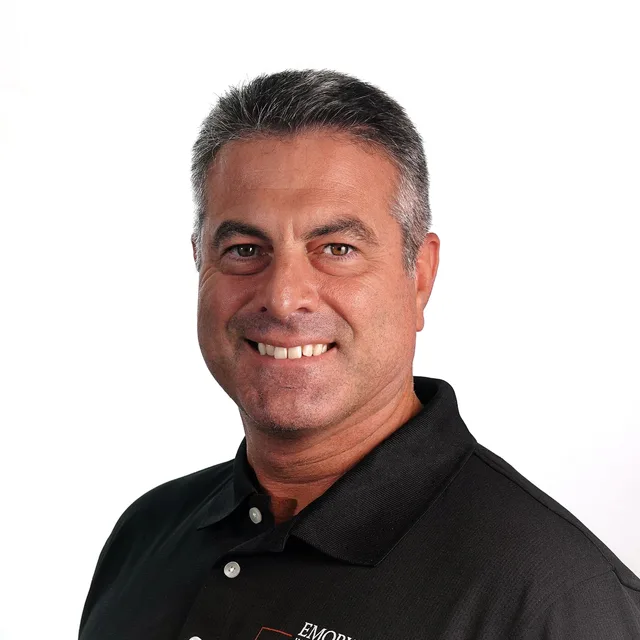 Gregory D. MyerPhD, FACSM, CSCS*DDirector, Emory Human Performance InstituteSPARCCOBRAAtlanta VA→
 Jed A. DiekfussPhDAssistant Professor, Department of Orthopaedics · Director of Motor Neuroimaging, Emory SPARCSPARCBiomotion LabCOBRAAtlanta VA→
 April (McPherson) NewmyerAssociate Bioinformatics ScientistSPARCGT LabU.S. SoccerCOBRAWu Tsai→
 Taylor M. ZulegerPostdoctoral Research FellowSPARCCOBRAAtlanta VA→